Crane & Aerial Lift Services
Mick's Tree Service LLC
Crane & Aerial Lift Services
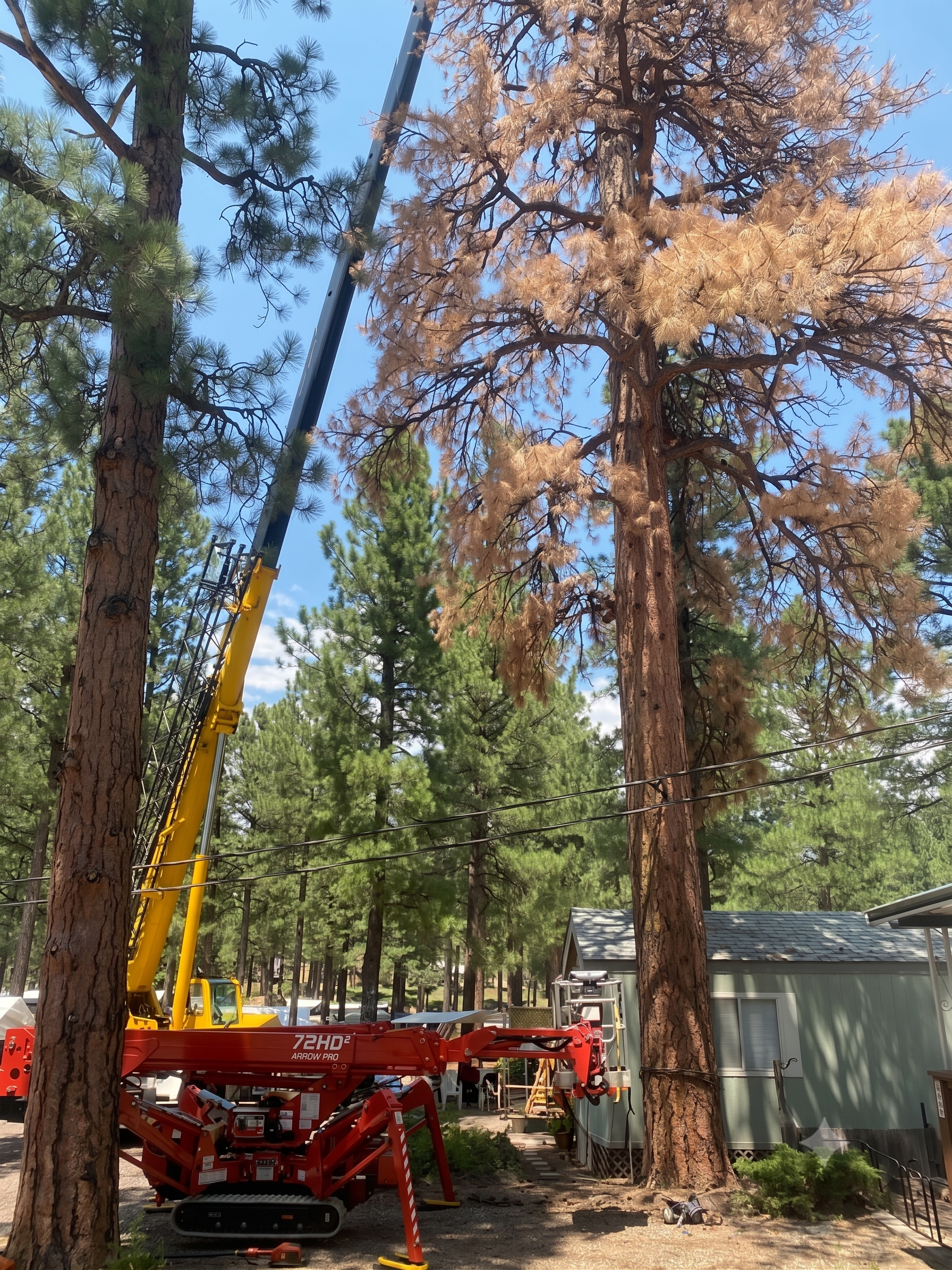
Mick's Tree Service LLC provides specialized equipment to handle complex tree work where safety, precision, and access are critical. These capabilities enable us to manage large trees, tight workspaces, and situations where conventional climbing methods are impractical or unsafe. We combine experienced operators, trained rigging crews, and certified equipment to perform tree removals, limb lowering, and canopy work with controlled precision.
Why Crane and Aerial Lift operations matter
Certain tree tasks are more safely performed using mechanized methods. This type of work enhances safety by reducing the need for climbers on precarious sections and allows for larger sections to be removed in a single lift or lowered accurately to staging areas. This approach is particularly valuable when:
- Trees are adjacent to homes or commercial buildings.
- Trees are very tall or structurally compromised.
- Access is limited and precision is needed to avoid collateral damage.
- Speed and efficiency are priorities for large removals.
Key Benefits of Our Aerial lift and Crane Services
Precision and control
Cranes can lift large sections and lower them to designated zones, minimizing property impact.
Enhanced safety
Reducing climbing in dangerous areas lowers risk to personnel and property.
Faster completion for large jobs
Mechanized lifts enable efficient removal of large trees or limbs.
Access in difficult locations
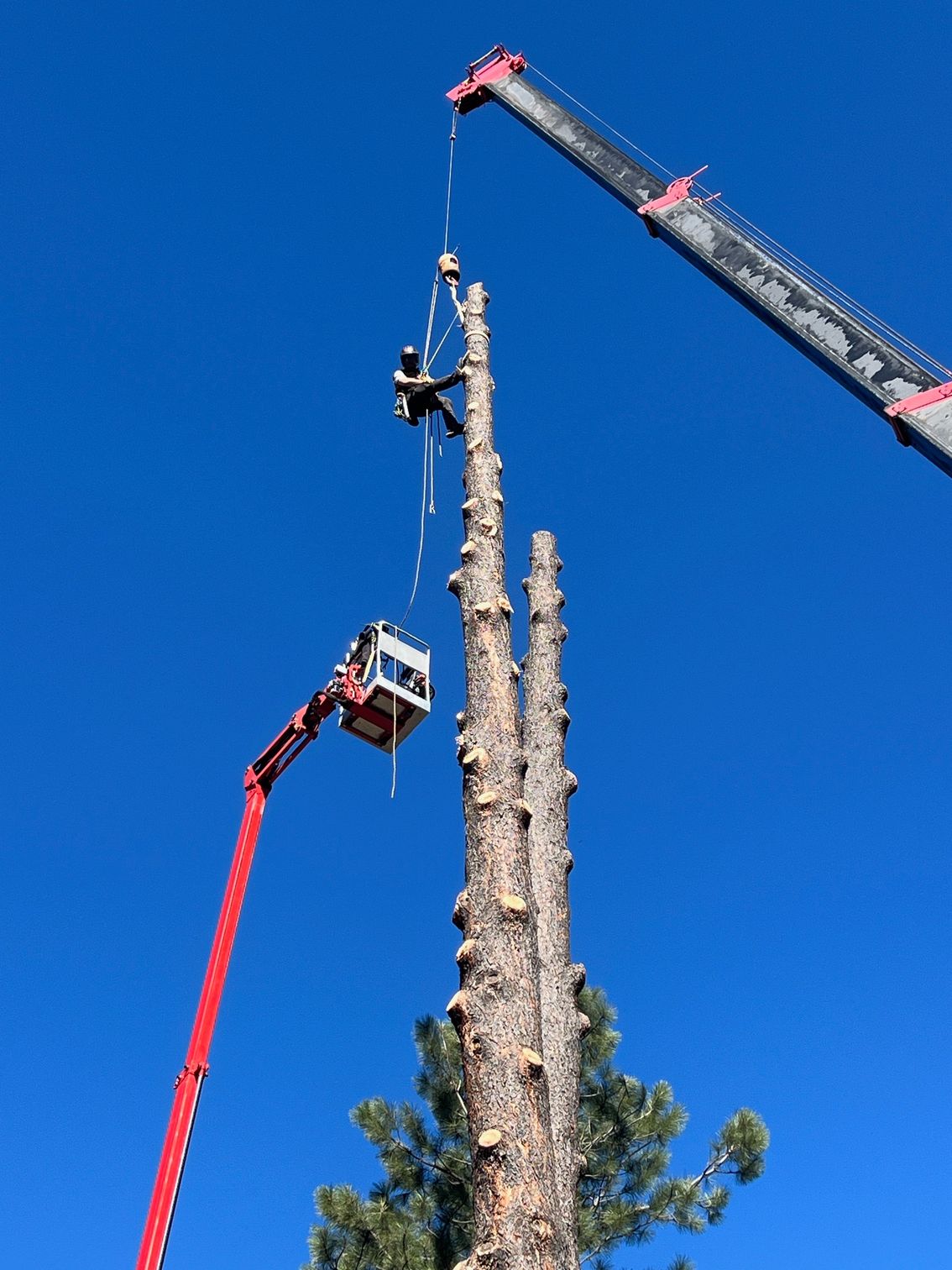
Aerial lifts offer safe access for pruning and targeted removals. Our spider lifts will fit through a 36 inch gate and take our crew up 92 feet.
Reduced ground footprint
In some cases, cranes can remove material without requiring wide staging areas that heavy machinery would otherwise need. All of our tracked equipment uses non-marking rubber tracks to protect our clients property.
Crane and Aerial Services Offerings in Detail
Types of mechanized work we perform
Large tree removals
When trees exceed safe climbing parameters or are located near structures we can utilize our specialized equipment for cost effective and safe removal.
Sectional dismantling in tight spaces
Remove trees section by section, using equipment and rigging techniques.
Aerial pruning
Our Aerial lifts allow technicians to reach high limbs for precise pruning or deadwood removal. We can safely reach the outer parts of the tree canopy that could otherwise not be safely reached through climbing.
Emergency removal
When a tree presents an immediate hazard, cranes and aerial lifts help expedite safe removal.
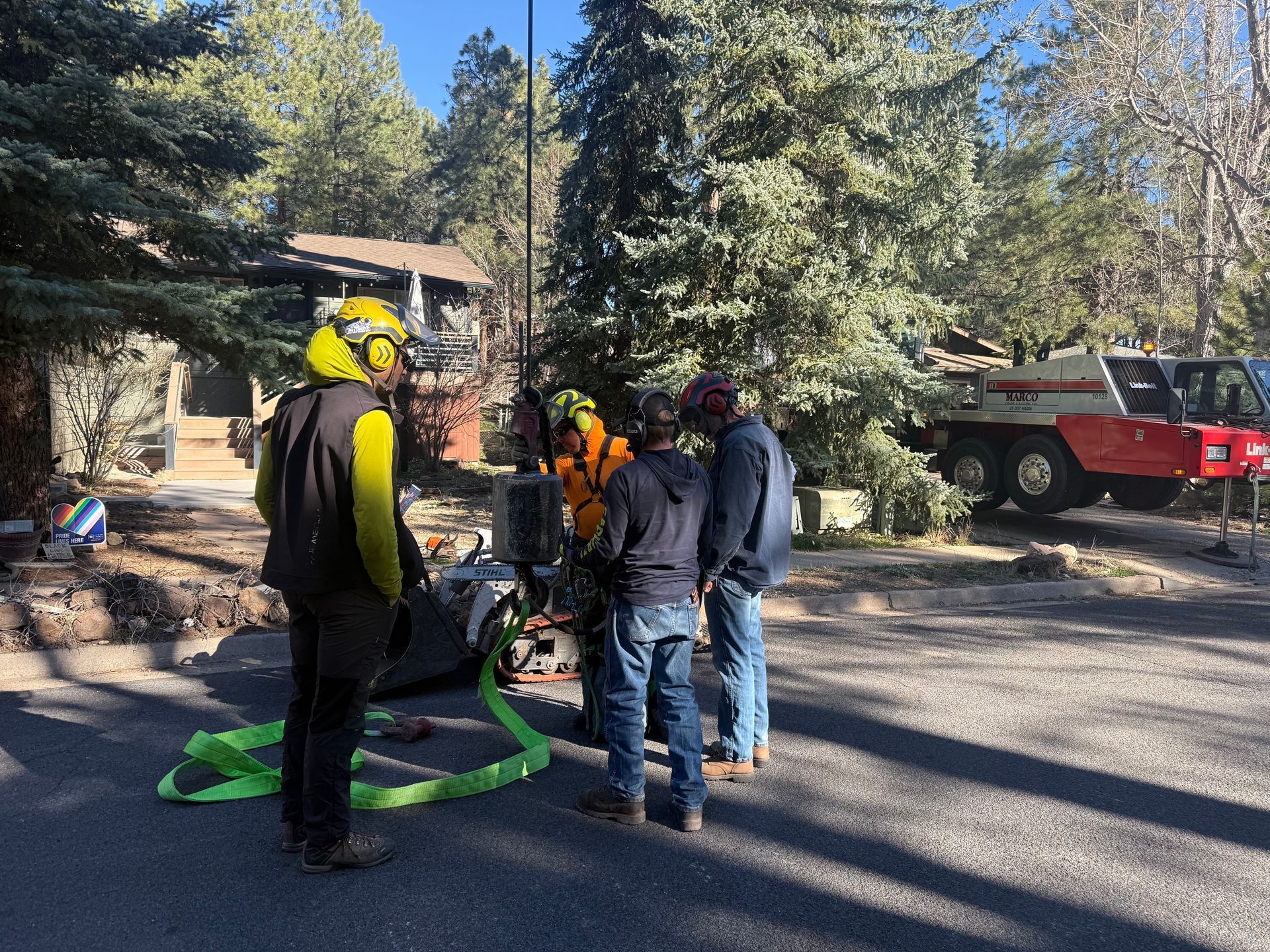
Our equipment and operator qualifications
Safety and certification are paramount. Our equipment is inspected regularly, and our operators are skilled in using these complex machines:
Spider Lifts and Bucket Trucks
Our operators are trained in aerial lift operation and use safety harness systems. Great for precise pruning, line-clearance, and working near roofs.
Cranes
Certified crane operators with experience in arboricultural lifts and rigging. We plan lift operations to minimize risk and control load placement. To maximize safety we utilize Bluetooth communications directly with our crane operator and ensure that we only lift 50% of the crane capacity at all times.
Rigging gear and certified slings
All rigging gear meets industry standards and is inspected prior to use.
The staging and planning process for mechanized lifts
When a job requires a crane or any of our aerial lifts, we begin with careful planning.
Site assessment
Determine load paths, drop zones, ground conditions, overhead hazards, and neighbor considerations.
Load handling plan
Design a lift plan that accounts for weight, crane capacity, and precise placement of sections.
Permitting and street closure
Coordinate with municipal authorities for necessary permits and temporary traffic control when working over streets or public rights-of-way.
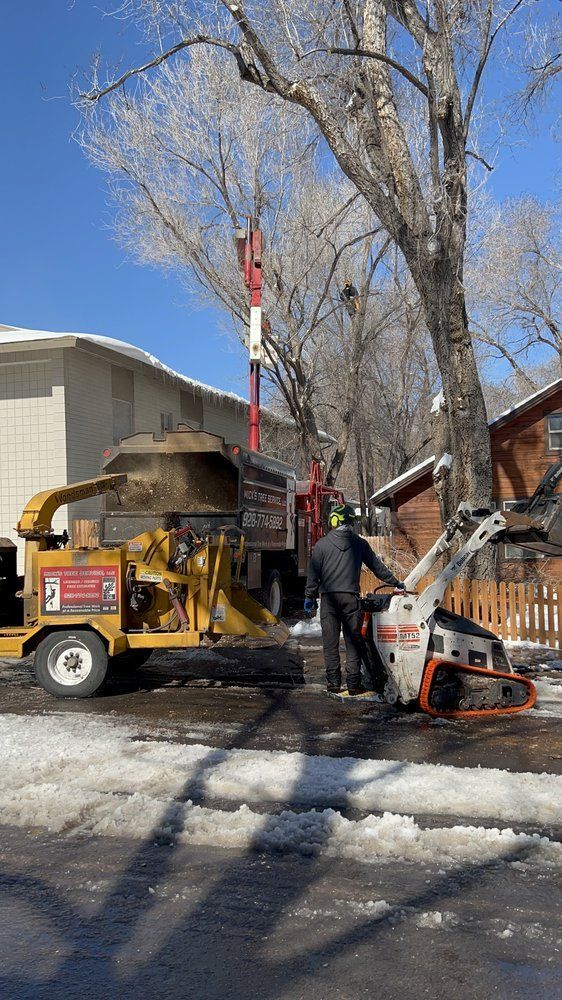
Ground protection
Place mats or protective surfaces to prevent lawn and hardscape damage during crane or equipment setup.
Communication and safety briefings
Conduct pre-job safety meetings and define roles, signals, and emergency procedures.
When a crane is the right choice versus one of our aerial lifts
We choose a crane when large sections must be lifted and placed safely off-site or to a specific staging area, or when the work area is tight and sections of the trees need mechanical hoisting.
We would utilize one of our aerial lifts to maximize safety and efficiency when appropriate.
Examples of crane and aerial lift projects
A tall ponderosa adjacent to a historic house: We contracted a crane to lift large sections and lower them into a staging zone 50 feet away, preventing property damage and completing the job efficiently.
A commercial site with limited ground access: A spider lift provided the reach needed to prune and thin parking lot canopy without impacting business operations or requiring street closures.
Safety considerations and insurance for mechanized lifts
We maintain comprehensive insurance and follow rigorous safety standards. Crane lifts are performed by certified operators who conduct thorough inspections, rigging checks, and risk assessments before each lift. Permits and traffic management are handled as needed, and we provide documentation to clients for liability and compliance tracking.
Frequently Asked Questions (FAQs)
How do you determine whether a crane is required?
The decision is based on tree size, location, proximity to structures, access limitations, and the need for precision lowering of large sections. We perform a site assessment and propose the safest, most efficient method.
Will using a crane damage my lawn or driveway?
We take measures to minimize damage—placing ground protection mats, selecting optimal crane set-up locations, and reducing footprint when possible. We also discuss restoration options as part of the project plan.
Are there permits needed for crane operation?
Sometimes. Working over streets or public rights-of-way, or requiring temporary traffic control, often necessitates permits. We handle permit coordination as part of our service.
How long does a crane removal take?
Some crane-assisted removals can be completed in less than two hours, while more complex sites may require multi-day planning and staging.
Contact and consultation
If your tree work requires specialized equipment call Mick's Tree Service LLC at (928) 774-5892 to schedule a site assessment. We will evaluate the safest and most efficient approach, and provide a detailed, itemized estimate.